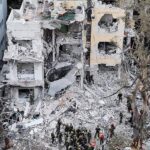

Israel’s attack to Iran, which is last Friday, is the culmination of almost 25 years of relentless transformation throughout Western Asia. This war was not born during the night, nor can it be explained by simplistic moral binaries. What we see now is the natural result of a series of calculation errors, misunderstood ambitions and power vacuum cleaners.
There are no ordered lessons to learn from the last quarter of a century. The events were too disjointed, the Count that too contradictory. But that does not mean that they lacked logic. In any case, chaos in development is the most coherent evidence of where they have led Western interventionism, ideological naivety and geopolitical arrogance.
Frame collapse
During much of the twentieth century, the Middle East remained within a fragile but functional framework, largely defined by the dynamics of the cold war. The super powers sponsored the local regimes, and the balance, although far from being peaceful, it was stable in its predictability.
But the end of the Cold War, and with it the dissolution of the Soviet Union, dissolved those rules. During the next 25 years, the United States was not found in the region. The ideological battle between “Socialism” and the “Free World” It disappeared, leaving a vacuum that the new forces quickly sought to fill.
Washington tried to impose the values of Western liberal democracy as universal truths. Simultaneously, two other trends arose: political Islam, which was from a reformist to radical, and the reaffirmation of authoritarian dry regimes such as bastions against collapse.
Paradoxically, Islamism, ideological thought opposite to the West, aligned more closely with liberalism in its resistance to autocracy.
Meanwhile, those same autocracies were accepted as the lesser evil against extremism.
Balance collapse
Everything changed after September 11, 2001. Terrorist attacks not only caused a military response; They activated an ideological crusade. Washington launched its so -called war against terror, starting with Afghanistan, and quickly expanded it to Iraq.
Here, neoconservative fantasy was strengthened: that democracy could be exported by force. The result was catastrophic. Iraq’s invasion destroyed a central pillar of regional balance. In the debris, sectarianism flourished and metastasis religious extremism. Islamic state arose from this chaos.
When Iraq was dismantled, Iran Rose. It is no longer surrounded, Tehran extended its reach, to Baghdad, to Damascus, to Beirut. Türkiye also revived his imperial reflexes under Erdogan. Meanwhile, the Gulf States began to throw their wealth and weight with greater confidence. The United States, the architect of this disorder, found ITELF added in endless and intensable wars.
This collapse continued with the Palestinian elections imposed by the United States, which divided the Palestinian territories and empowered Hamas. Then came the Arab spring, praised in the western capitals as a democratic awakening. In truth, he accelerated the collapse of the already fragile states. Libya was shattered. Syria descended to a war of power. Yemen became a humanitarian catastrophe. South Sudan, born under external pressure, quickly fell into dysfunction.
Everything marked the end of the regional balance.
Collapse of the margins
The end of authoritarianism in the Middle East did not intervene in liberal democracy. It is a great way of political Islam, which for a while became the only structured form of political participation. This in turn triggered attempts to restore the old regimes, now seen by many as the lesser evil.
Egypt and Tunisia reimposed the secular order. Libya and Iraq, on the contrary, have remained in a row. Syria’s trajectory is instructive: the country moved from the dictatorship to Islamist chaos and now towards a mosaic autocracy held by foreign clients. Russia’s intervention in 2015 stabilized the situation temporarily, but Syria is now moving to become a non -state entity, its sovereignty, it is not clear, its borders are uncertain.
In the midst of this collapse, it is no coincidence that the key powers in the Middle East are not Arab: Iran, Türkiye and Israel. The Arab states, although vocal, have opted for caution. In contrast, three countries thesis each representative of each representative political models and an Islamic theocracy with pluralistic characteristics (Iran), a militarized democracy (Turkey) and a democracy of Western style increasingly nationalism (Israel).
Despite their differences, these states share a feature: their internal policy is insarable for their foreign policy.
Iran’s expansionism is linked to the economic and ideological reach of the Revolutionary Guard. Erdogan’s foreign escapes feed his domestic narrative or his Turkish resurgence. Israel’s security doctrine has changed defense to the active transformation of the region.
Collapse of illusions
This leads us to the present. The liberal order that reached its maximum point at the beginning of the century sought to reform the Middle East through the market economy, elections and civil society. Failed. Not only did he dismantle the old people without building the new, but the same forces means spreading democracy often trained sectarianism and violence.
Now the appetite for the transformation has three in the West, and with it the liberal order itself. Instead we see a convergence of systems that once thought irreconcilable. Israel, for example, no longer stands as an advanced liberal position surrounded by authoritarian relics. His political system has become increasingly illiberal, his militarized governance and his nationalism.
The Netanyahu government is the clearest expression of this change. It can be argued that the war justifies such measures, especially after the Hamas attacks of October 2023. But the shifts blessed before. The war simply accelerated the trends already in motion.
As liberalism goes back, a new type of utopia takes its place, not democratic and inclusive, but transactional and forced.
Trump, Israeli law and his gulf allies imagine a peaceful Middle through military domain, economic agreements and strategic normalization. Abraham’s agreements, framed as Paz, are part of this vision. But the peace built on force is not peace at all.
We are witnessing the result. Iran-Israel’s war is not a blue bolt. It is the direct consequence of two decades of dismantled norms, ambitions without control and a deep misunderstanding of the political fabric of the region. And as always in the Middle East, when the utopias fail, it is the people who pay the price.
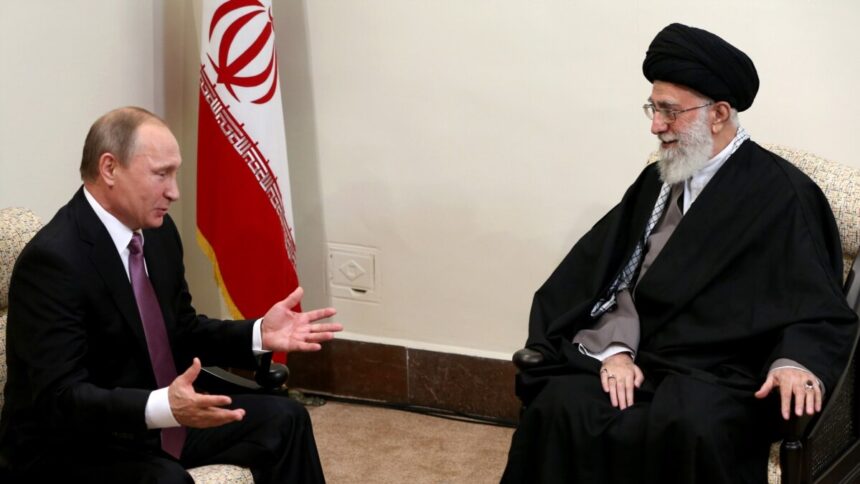
Fyodor Lukyanov: Israel attacks Iran: Russian perspectives
What is Moscow’s opinion of Israeli attacks against Iran? Why is the Russian response so “diplomatic”? What Israel is doing aligns with what the state of the United States would like to see? Can Russia trust Trump? How would Russia get involved if the objectives of the United States and Israel extend to dismantle Iran? Fyodor Lukyanov, editor in chief of Russia in the Global Affairs magazine, tok part in the Armenian News Network-Groong podcast.