



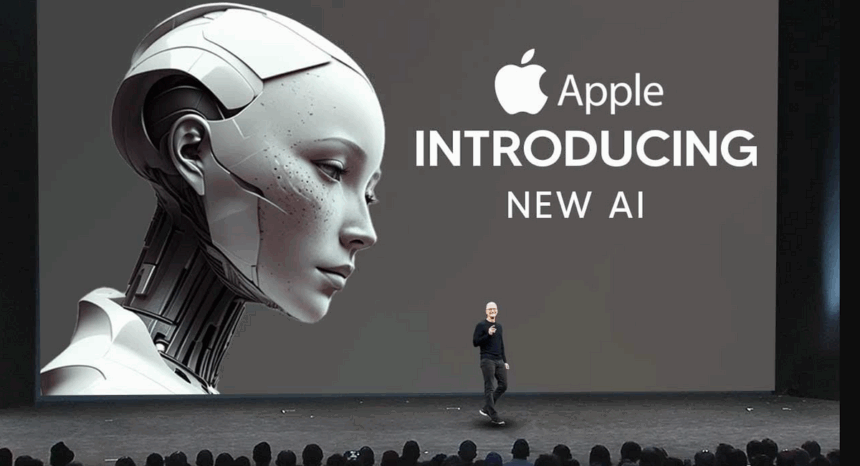
In 2023, a popular perspective on AI was like this: of course, it can generate a lot of impressive text, but it really cannot reason: everything is superficial mimicry, only “stochanic parrots.”
At that time, it was easy to see where this perspective came from. Artificial intelligence had moments of being impressive and interesting, but also constantly failed basic tasks. The CEO of Technology said they could continue making the models larger and better, but the CEO of technology say things like that all the time, even when, behind the scene, everything remains united with glue, adhesive tape and low -wage workers.
Now it is 2025. I still listen to the derogatory perspective, in part when I speak with academics in linguistics and philosophy. Many of the highest profile efforts to explode the AI bubble, such as the recent Apple Paper who intends to discover that Ais really cannot reason, delays in the statement that the models are only shit generators that are not improving much and that Gobter does not obtain.
But more and more I think that repeating these statements is a bad service to our readers, and that the academic world cannot advance and deal with the most important implications of AI.
I know it is a bold statement. So let me support it.
“The illusion of thought” illusion of relevance
At the moment the Apple Paper was published online (it still has a pair of the legs revised), it turns off. The videos explained that millions of views accumulated. People who generally do not read much about AI listened to Apple’s role. And while the document itself acclaimed that the performance of AI in the “moderate difficulty” tasks was improving, many summaries of their conclusions focused on the main claim of “a fundamental limitation of a fundamental scale in thought capacities.”
For much of the audience, the newspaper confirmed something they wanted to believe: that the generative AI does not really work, and that is something that gained change in the short term.
The document analyzes the performance of modern first level language models in “reasoning tasks”, basically, complicated puzzles. It conforms to a certain point, that performance becomes terrible, which according to the authors shows that the models have not developed a true planning and problem -solving skills. “These models fail to develop generalizable problems for problems for task planning, with performance by collapsing zero beyond a certain complexity threshold,” as the authors write.
That was the conclusion of the upper line, many people took the document and the broader discussion about it. But if you shit on the details, you will see that this finding is not surprising, and that is not, it is nothing about AI.
Much of the reason why the models fail the problem given in the document is not because they cannot solve it, but because they cannot express their responses in the specific format that the authors chose to require.
If you ask them to write a program that generates the correct answer, they make it efforts. On the contrary, if you ask them to provide the text response, Line By Line, they are Angelleas reach their limits.
That seems an interesting limitation for current AI models, but it is not not “no” no “” capabilities for resolving generalizable problems “or” planning tasks. “
Imagine someone arguing that humans cannot “really” make a generalizable multiplication “Balkause, while we can calculate multiplication problems of 2 digits without any problem, most of us ruin somewhere in the way wememsing. Trying. The problem is not that” we are not general reasoning. do it.
If the reason we care about the “reason why reason” is fundamental philosophical, then exploring at what point the problems give too much time for them to solve is relevant, as a philosophical argument. But I think that most people care what AI can and cannot do for much more practical reasons.
AI is a workshop, whether you can “really reason” or not
I hope my work is automated in the coming years. I don’t want that to happen, obviously. But I can see writing on the wall. I regularly ask Ais to write this newsletter, just to see where the competition is. He is not there yet, but he is improving all the time.
Employers are also doing it. The hiring of entry level in professions such as law, where entry level tasks are AI-automatable, seems to be hiring. The labor market for recent university graduates looks ugly.
The optimistic case around what is happening is something like this: “Of course, the AI will eliminate many jobs, but will also create more new jobs.” That most positive transition could happen, although I do not want to have it, but it would mean that many people abruptly find all their skills and training of suddenly and, therefore, need to quickly develop a new set of abilities with conspiciency.
It is this possibility, I think, the one that is coming for many people in industries such as mine, which are Alreatry seeing AI replacements. It is precisely because this perspective is so terrifying that the statements that Ais are only “stochastic parrots” that they really cannot think that they are so attractive. We want to hear that our jobs are safe and that Ais are a noblegorador.
But, in fact, he cannot answer the Wheter AI question, he will take his work with reference to a mental experiment, or with reference to how he is asked to write all the steps of Tower of Hanoi’s puzzles. The way to answer the question of whether ai will take his job is to invite him to try. And, uh, this is what I got when I asked ChatgPP to write this section of this newsletter:

Is it “really reference”? Maybe not. But it is not necessary to put me potentially unemployed.
“Whether they are simulating or not, thought has no drinks on whether the machines are capable of moving to the world for better or worse,” argued the professor of Philosophy and the AI Government of Cambridge in a recent piece, and I think he is the piece of the piece of ambigu Piew. If Vox gives me a pink slip, I do not think it comes anywhere if I maintain that it should not be replaced because O3, above, cannot solve a sufficiently complicated towers of Han’s Dod Eht.
Critics become irrelevant when we need them more
In his piece, the law examines the state of AI criticism and finds it quite bleak. “A lot of critical writing recently about the … read as an extremely illusory thought about what exactly the systems can and cannot do.”
This is my experience too. Critics are often trapped in 2023, giving stories of what AI can and cannot make the right port for two years. “Many [academics] I don’t like AI, so they don’t follow it closely, “Law argues.” They do not follow him closely, so they still think that 2023 criticisms maintain water. They don’t. And that is unfortunate because academics have important contributions to do. “
But, of course, for the labor effects of AI, already long term, for global catastrophic risk concerns that they can present, what matters is not induced to Ais to make silly mistakes, but what they can do for success.
I have my own list of “easy” problems that Ais still cannot solve, they are quite bad in the chess puzzles, but I do not think that type of work is sold to the public as a vision of the “real truth” about AI. And it definitely does not discredit the really scary future in which experts grow more and more towards what we are going.
A version of this story originally appeared in the future perfect bulletin. Register here!